Robot Carer UK

More years of independence, supported by better machines

Care technology already helps with falls, medication, family contact and companionship. As AI and robotics improve, home assistants could become among the most useful machines we build.

A friendly female care android with a synthetic skin face bringing tea to an older man

The home robot is taking shape

Today’s devices each handle a narrow job. New generations will combine conversation, perception, movement and practical help.

A sleek clearly synthetic humanoid robot serving an older man at home

Useful help is already here

Alarms, medication dispensers, smart displays, activity sensors and companion devices already support life at home.

A silver humanoid care robot discussing health information with an older couple

A new kind of independence

More capable AI could coordinate daily support, notice meaningful changes and help people remain in their own homes for longer.

A clearly synthetic humanoid robot supporting an older man while walking through a modern home

A good place to start

Answer a few questions about the person, the home and the main concern. The finder suggests relevant types of technology and points to detailed guides.

Start the finder
A friendly humanoid robot bringing tea and a medication tray to an older man

Explore the directory

Products, services and research projects relevant to UK homes.

Available in the UK Evidence B

Companion robots

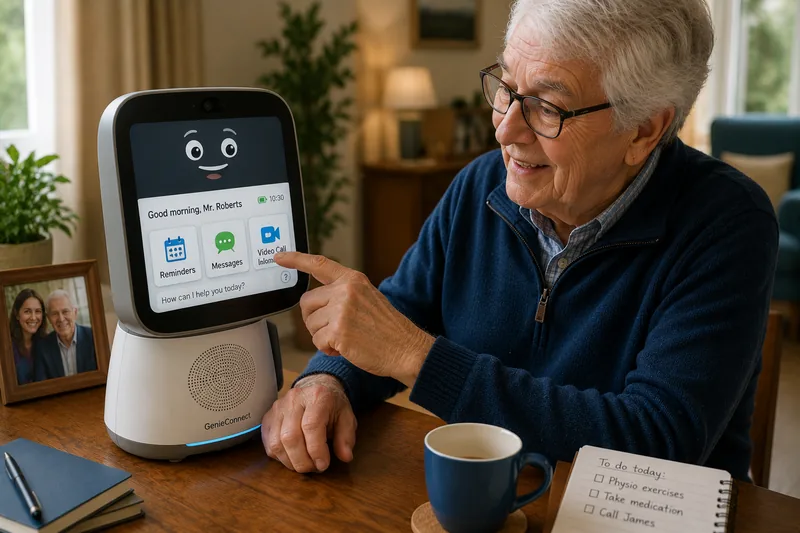
GenieConnect

by Service Robotics

A purpose-built digital companion linked to a remote-care platform.

Access
Available through UK care organisations
Cost
Quote required
Camera
Yes, for video calls

Main limitation: It cannot provide physical care or guarantee that a prompted task has been completed.

View the reality check
Available in the UK Evidence B

Robotic pets

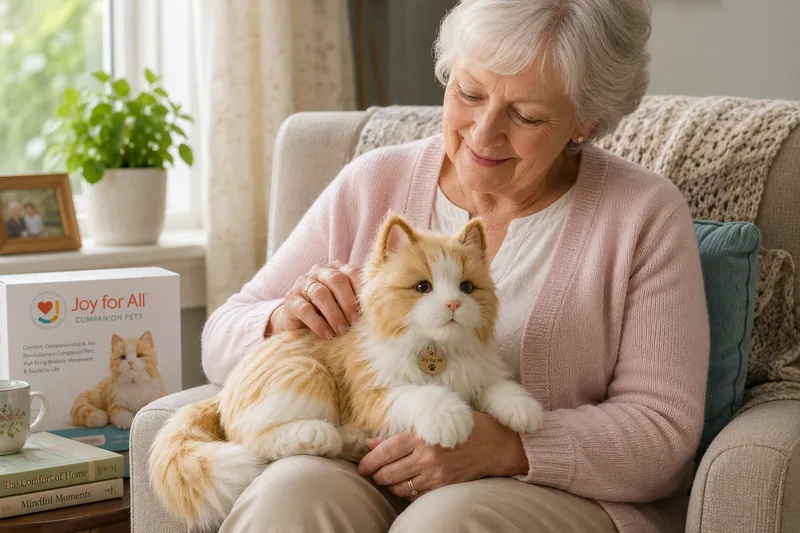
Joy for All Companion Cat

by Ageless Innovation

A responsive robotic cat that purrs, meows and reacts to touch.

Access
Available from UK retailers and import sellers
Cost
£100–£200
Camera
No

Main limitation: It is a companion object, not a medical device, safety monitor or substitute for human contact.

View the reality check
Limited / provider access Evidence A

Robotic pets

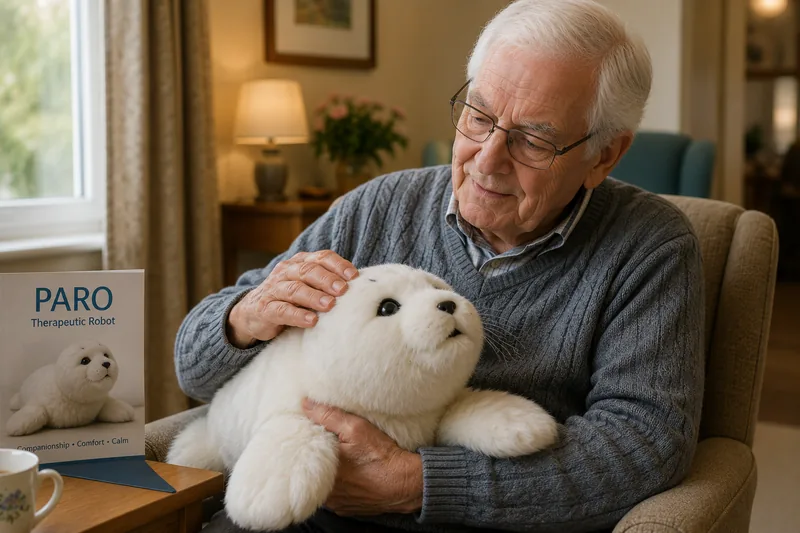
PARO Therapeutic Robot

by AIST / PARO Robots

A sophisticated seal-shaped interactive robot used in care and clinical settings.

Access
Specialist purchase; UK access may require a distributor or organisation
Cost
Over £5,000
Camera
No conventional camera used for remote viewing

Main limitation: High cost, no practical-care function and not universally welcomed by users.

View the reality check
Overseas or uncertain UK access Evidence B

Companion robots

ElliQ

by Intuition Robotics

A conversational companion device designed for older adults.

Access
Not clearly offered as a normal UK consumer purchase
Cost
Subscription
Camera
Device configuration varies; check current specification

Main limitation: It is not a medical alert device and current UK purchase/support is uncertain.

View the reality check
Available in the UK Evidence B

Fall detection

Taking Care Digital Fall Alarm

by Taking Care

A home-and-garden alarm with automatic fall detection and 24-hour monitoring.

Access
Available to UK consumers
Cost
Setup plus monthly fee
Camera
No

Main limitation: No fall detector catches every event, and the wearable still has to be worn.

View the reality check
Available in the UK Evidence B

Medication

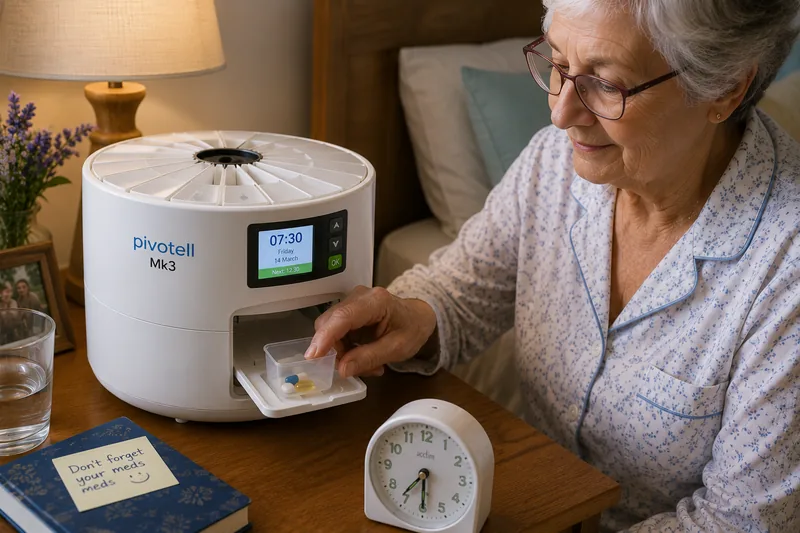
Pivotell Mk3/24 Automatic Pill Dispenser

by Pivotell

A lockable rotating dispenser that presents the scheduled dose and sounds an alarm.

Access
Available direct in the UK and through some care services
Cost
£100–£200
Camera
No

Main limitation: It cannot confirm that medicine was swallowed and is unsuitable for some medicines or regimens.

View the reality check

How strong is the evidence?

Grades reflect the quality and independence of the available evidence. Each product page shows the sources behind its assessment.

Read the methodology
A

Relatively strongIndependent controlled evidence or a substantial credible research base.

B

Promising or establishedUseful evidence with important limitations or implementation dependence.

C

LimitedSmall studies, observational evidence or indirect support.

D

Mainly claimsManufacturer-led evidence or plausible function without useful independent testing.

Practical guides

View all guides

Care technology and home robots

Robot carers in the UK

Care robots, companion devices, telecare, embodied AI and the technologies shaping future independent living.

16 min readReviewed 22 July 2026

Companionship without the litter tray

Robotic pets for dementia: what they may help with

How robotic cats, dogs and specialist therapeutic robots are used, who may enjoy them and why individual response matters more than marketing copy.

9 min readReviewed 17 July 2026

Reassurance with less intrusion

Monitoring an older parent without cameras

Movement, door, appliance and environmental sensors can show patterns without filming someone at home. Here is what those patterns can and cannot tell you.

10 min readReviewed 13 July 2026

Useful household assistant, not a care service

Using Alexa or a smart display with an older parent

Calls, reminders, routines and smart-home control can be genuinely useful, provided the account setup and limitations are understood.

8 min readReviewed 13 July 2026

Your home should still feel like your home

Cameras, microphones, movement sensors and family dashboards need clear controls. The person receiving support should retain as much choice and privacy as possible.

Explore privacy-conscious options

Humanoid tracker

Which robots are actually getting closer?

Follow production targets, order routes, home demonstrations and UK activity across the machines most relevant to future care.

Open the tracker
A friendly female-coded care robot serving tea to an older man