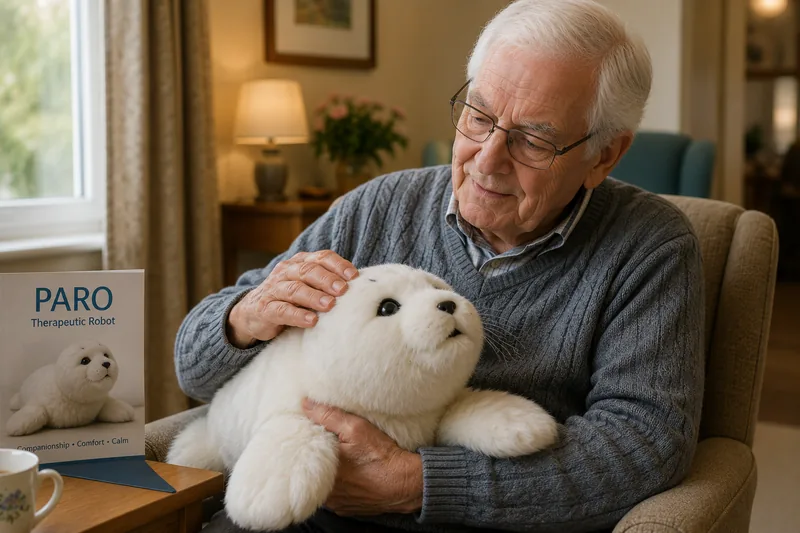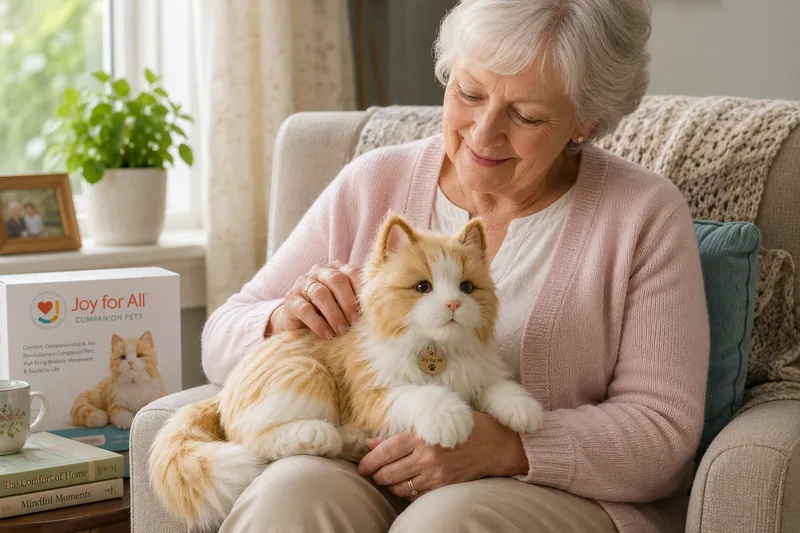
Choose the pet the person is most likely to enjoy, then watch their actual response. A more expensive or more realistic robot is not automatically a better companion.
UK comparison
Robotic pets compared for UK buyers
These products sit in very different categories. Joy for All and Chongker are consumer companions; PARO is a specialist therapeutic robot used mainly by organisations.
| Product | Typical cost | Evidence | Best fit | |
|---|---|---|---|---|
| Joy for All Companion Cat | £100–£200 | Grade B | Someone who enjoys animals and tactile objects but cannot care for a live pet. | Details → |
| Chongker Interactive Companion Robot Cat | £100–£200 | Grade C | Someone who values a more realistic appearance, soft tactile contact and pet-like sound or heartbeat effects. | Details → |
| Joy for All Companion Pup | £100–£200 | Grade C | A dog lover who would enjoy a responsive companion object. | Details → |
| PARO Therapeutic Robot | Over £5,000 | Grade A | Care settings able to train staff and use it as part of structured engagement. | Details → |
What newer research changes
An October 2026 review combined studies of live-animal and robotic-animal activities in older adults. It found improvements in depressive symptoms and some cognitive measures across the combined group, but no significant pooled improvement in loneliness or anxiety. These results cannot be assigned to robotic pets alone.
Another 2026 review found that robotic-pet effects on depression were in a promising direction but not statistically established. That is compatible with an individual enjoying a companion cat or dog. The practical question is whether this person likes interacting with it, not whether every purchaser can expect a measured clinical benefit.
What a robotic pet may provide
Robotic pets offer touch, sound and predictable responses without feeding, walking or veterinary care. They can become something to stroke, talk about or include in a familiar routine.
They do not treat dementia and they do not replace human company. The useful question is narrower: does this particular person become calmer, more engaged or simply happier when the device is present?
What the evidence says in 2026
The overall evidence remains encouraging but uneven. Studies of PARO provide the largest product-specific research base, while lower-cost robotic pets have smaller studies and observational evidence suggesting possible improvements in mood, engagement and social interaction for some older people.
Recent 2026 work has not turned robotic pets into a universal dementia intervention. A randomized PARO study, a study of a low-cost robot pet in family care and new implementation research all reinforce the same practical message: response varies, and how the robot is introduced and used matters.
Joy for All: the sensible low-cost starting point
Joy for All cats and dogs are intentionally simple. They respond to touch and sound, do not need Wi‑Fi or an app, and cost a small fraction of PARO. That makes them relatively easy to trial without turning the decision into a major care-technology project.
The cat is particularly well represented in low-cost robotic-pet research. Its limitations are equally clear: movement and sound are mechanical, batteries need attention and some people dislike the artificial behaviour.
Chongker: more emphasis on realism
Chongker offers more realistic-looking cats with soft bodies, pet-like sounds and, on some models, simulated heartbeat and more elaborate movement. Exact features vary significantly between versions, so check the specific listing rather than assuming every Chongker cat behaves the same way.
The independent evidence is much thinner for Chongker specifically than for PARO or the broader low-cost robotic-pet category. Choose it because the person values the appearance and tactile feel, not because realism has been proven to produce better dementia outcomes.
PARO: the specialist option
PARO is a therapeutic seal robot with a substantially larger research literature and more sophisticated responsive behaviour. It is mainly relevant to care organisations, hospitals and structured therapeutic activity rather than casual household purchase.
PARO lists a United Kingdom and Ireland distributor contact, so UK access exists, but this remains specialist procurement rather than an ordinary consumer checkout.
Who may respond well
- Someone with a longstanding affection for cats, dogs or animals generally.
- A person who enjoys tactile objects, stroking and repetitive soothing movement.
- Someone unable to care safely for a live animal.
- A person who becomes more conversational or engaged when the pet is introduced.
- A care setting able to introduce the device gently and observe whether it helps.
Reasons to stop or try something else
Some people find robotic pets irritating, frightening or patronising. Others become distressed when the device does not behave like a real animal. Do not insist that somebody should enjoy one because it is marketed for dementia.
If agitation increases, the person repeatedly asks for the pet to be removed or the sounds and movements are clearly unwelcome, that is useful evidence. Switch it off and try a different form of activity or companionship.
A practical way to choose
- Start with whether the person historically preferred cats, dogs or neither.
- Prefer a low-cost consumer pet for a first household trial unless there is a specific reason to consider PARO.
- Check sound level, weight, texture and how easy it is to switch off.
- Introduce it openly as a companion object rather than trying to prove that it is a real animal.
- Watch the person’s response over several sessions rather than judging the first five minutes.
- Keep it only if it adds something positive to daily life.
When professional advice matters
Seek appropriate medical, pharmacy, occupational-therapy, social-care or safeguarding advice where the decision affects medication, emergency response, capacity, consent, mobility or significant risk. A website cannot observe the home, the person or the family’s ability to respond.