Start with the practical problem, choose the least complex reliable option and decide who acts when something goes wrong.
What it can do well
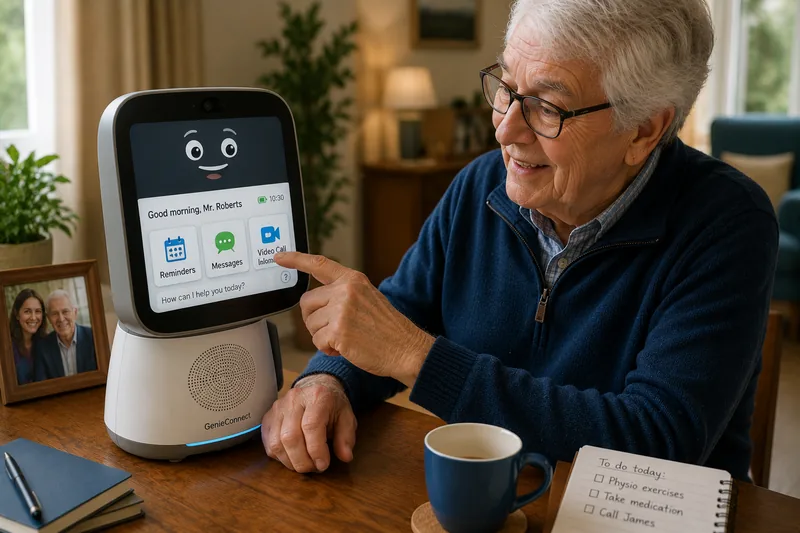
- Voice and video calls to family contacts.
- Spoken reminders for appointments, meals or routines.
- Control compatible lights, plugs and heating equipment.
- Play radio, music, audiobooks and simple games.
- Call a configured emergency contact using supported Alexa features.
Limits of a smart speaker
A standard Echo is not a monitored personal alarm, fall detector or clinical service. It relies on power, broadband, correct account settings and a voice command being heard and understood.
It may complement a proper alarm service. It should not quietly inherit responsibility for emergencies because it behaved impressively during setup.
Setup matters more than the box
- Create a clear account and contact arrangement.
- Test calls from the exact room and seating position used.
- Keep commands short and consistent.
- Use visible written prompts where helpful.
- Check camera shutters and microphone controls together.
- Retest after router, phone number or account changes.
Privacy choices
Smart speakers process voice requests and keep account histories according to the provider’s settings. Review voice history, contact permissions, household profiles, purchasing controls and who can use remote calling features.
When professional advice matters
Seek appropriate medical, pharmacy, occupational-therapy, social-care or safeguarding advice where the decision affects medication, emergency response, capacity, consent, mobility or significant risk. A website cannot observe the home, the person or the family’s ability to respond.