Care, Extended
We believe technology should never replace human connection but it can protect it. From dementia friendly companions to smart monitoring systems, RobotCarer reviews the tools that help your loved ones stay independent for longer.


Why these 3 features matter
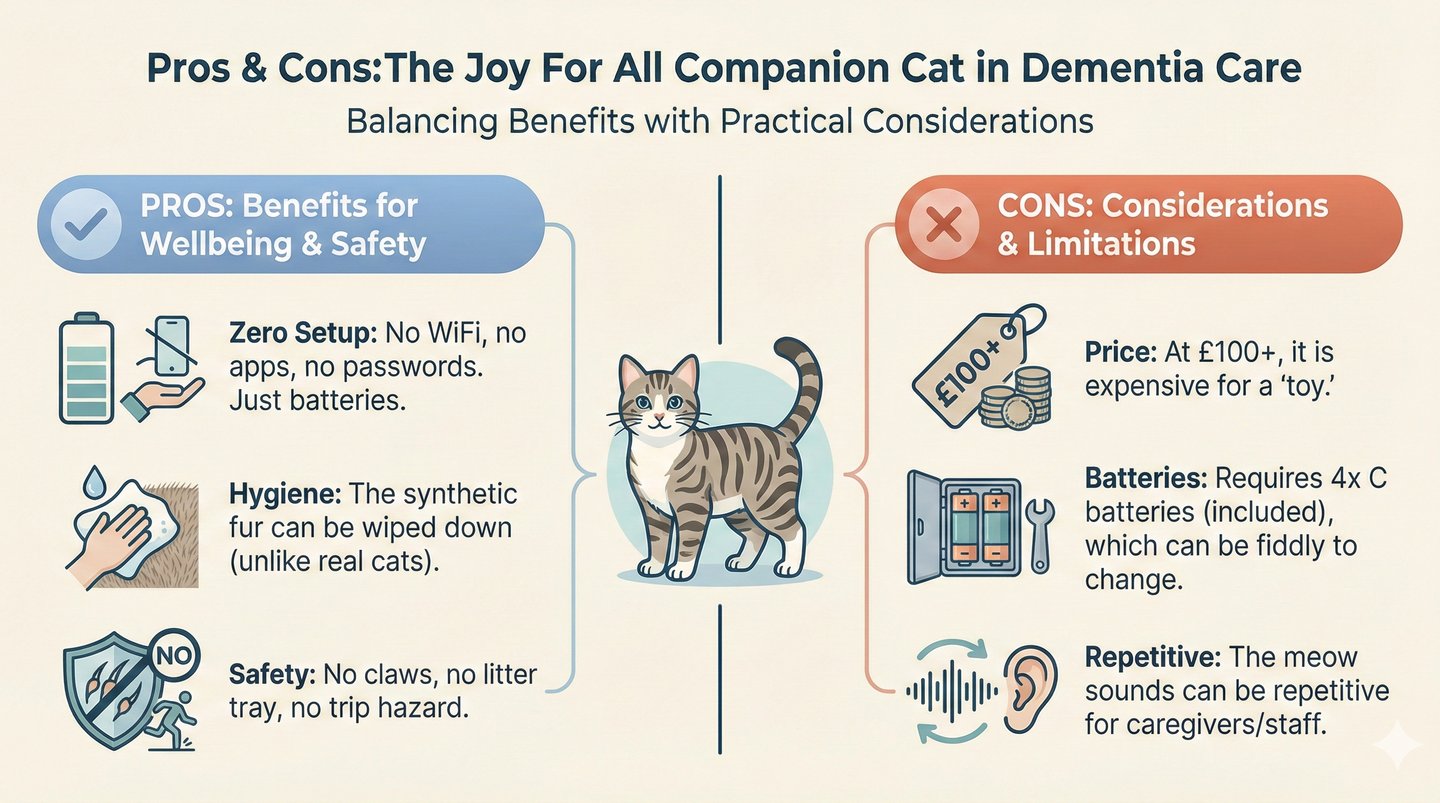
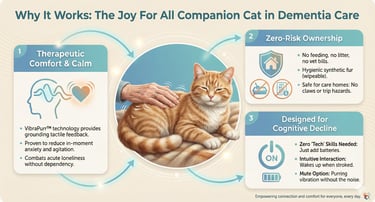
As the infographics above illustrate, the Joy For All cat isn't just a toy; it solves three specific problems often found in dementia care. Here is the breakdown of why families find it effective:
1. The Science of "VibraPurr" (Tactile Grounding)
The most common question we get is: "Does it just make noise?"
No. The VibraPurr™ technology is the key differentiator. Anxiety in dementia patients often stems from sensory confusion. The deep, rhythmic vibration of the cat's purr provides tactile grounding—a physical sensation that anchors the patient in the moment, helping to lower heart rates and reduce agitation without medication.
2. Zero-Risk for Burned-Out Caregivers
Introducing a real therapy animal is wonderful, but it adds workload (feeding, cleaning, vet visits) to caregivers who are often already exhausted.
Hygiene: The synthetic fur is designed to be wiped down with a damp cloth, making it suitable for care homes where infection control is a priority.
Safety: There are no claws to scratch thin skin, and no risk of the "pet" tripping a patient who has mobility issues.
3. Dignity by Design
Many "comfort toys" look like children's dolls, which can feel infantalising for an elderly adult. The Joy For All cat is designed with realistic proportions and adult-appropriate aesthetics.
The "Sleep" Mode: Because it uses motion sensors, you don't need to fiddle with tiny "On/Off" switches every time. Leave it on the sofa, and it wakes up naturally when your loved one sits down—just like a real cat would.
See what other families are saying: There are over 10,000 reviews for this specific model. Read the 5-star customer stories here to see how it has helped others with dementia.
The "Uncanny Valley" Test
Does it look fake?
From 6 feet away: It looks incredibly real. The fur is high-quality and synthetic.
Up close: You can hear the mechanical whir of the motors. However, for a user with cognitive decline or hearing loss, this "mechanical" aspect often fades into the background, leaving only the comforting physical presence.
The "Mute" Trick
One hidden feature families love: You can turn the "Meow" sound OFF while keeping the purring vibration ON. This is perfect for communal care homes where constant noise might disturb other residents.
Final Verdict
If your loved one is lonely but can no longer care for a live animal, the Joy For All Cat is not a "toy" it is a therapeutic tool. It provides the comfort of touch without the responsibility.
Review: Is the Joy For All Companion Cat worth it for Dementia? (2025 UK Guide)
Verdict: 4.5/5 stars
Best for: Moderate to late-stage dementia, anxiety reduction, and loneliness.
When we first unboxed the Joy For All Companion Cat, we were skeptical. Can a battery-operated toy really replace the comfort of a living pet?
After testing it with focus groups in care settings, the answer is a surprising "Yes"—but with caveats. It isn't a robot for "tech enthusiasts." It is a specialized medical device disguised as a cat, designed specifically to lower cortisol (stress) levels in elderly patients.